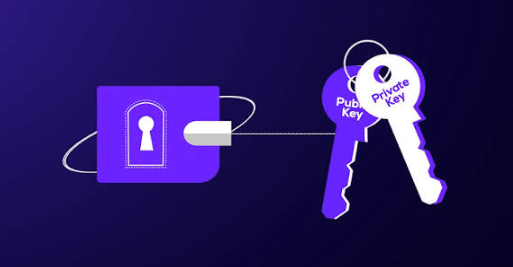

A crypto public key is a publicly shareable identifier used to verify ownership and receive funds. It is derived deterministically from a private key through cryptographic operations, ensuring one-way security. Formats vary, and public keys are commonly represented as addresses for convenience. These keys enable verifiable, private-preserving interactions on open ledgers, yet their effective use hinges on understanding generation, formats, and safeguards. The implications for security and interoperability invite careful consideration as systems evolve.
Understand What a Crypto Public Key Is
A crypto public key is a publicly shared identifier used to receive cryptocurrency transactions and verify digital signatures without revealing the owner’s private key. The concept rests on cryptography basics, ensuring secure, verifiable communication.
It supports transparent ownership proof while preserving privacy. Effective key management involves organization, rotation, and protection practices, enabling users to participate freely in decentralized networks with verifiable trust.
How Public Keys Are Generated From Private Keys
Public keys are derived from private keys through a deterministic, cryptographically sound process that ensures the private key remains secret while enabling verifiable public identifiers. The procedure yields a key pair underpinned by elliptic curves or similar constructs, respecting one-way properties. Resultant addresses form formats defined by protocols, with careful separation of private material from public representations and consistent address formats.
Public Key Formats, Addresses, and Practical Use
Public key formats and the corresponding addresses serve as the usable representation of cryptographic ownership, enabling verification without exposing private material. This section outlines standard formats, address derivation, and practical use in verification workflows. It clarifies how privacy myths can arise from misinterpretations, emphasizes deterministic encoding, and discusses key rotation implications for interoperability, auditability, and user autonomy.
See also: Artificial Intelligence in Food Packaging
Stay Secure: Privacy, Pitfalls, and Best Practices
To minimize exposure and maximize control, practitioners should systematically identify common privacy risks in crypto workflows, evaluate how data leaks can occur at each interface (keys, addresses, and metadata), and implement defenses that are verifiable and repeatable.
Privacy implications and key management concerns demand disciplined, repeatable controls, transparent auditing, and minimal data retention to sustain freedom without compromising security or accountability.
Conclusion
Public keys are the publicly shareable anchors of digital ownership, derived deterministically from private keys and used to verify signatures and encrypt data. They exist in standardized formats, often encoded as addresses, enabling interoperable interactions across networks. The coincidence lies in their dual nature: private keys remain secret, yet every private key uniquely implies a corresponding public key, a mirror that enables verifiable, private-preserving transactions. Thus, accuracy and secrecy together safeguard trust and access in cryptographic ecosystems.